
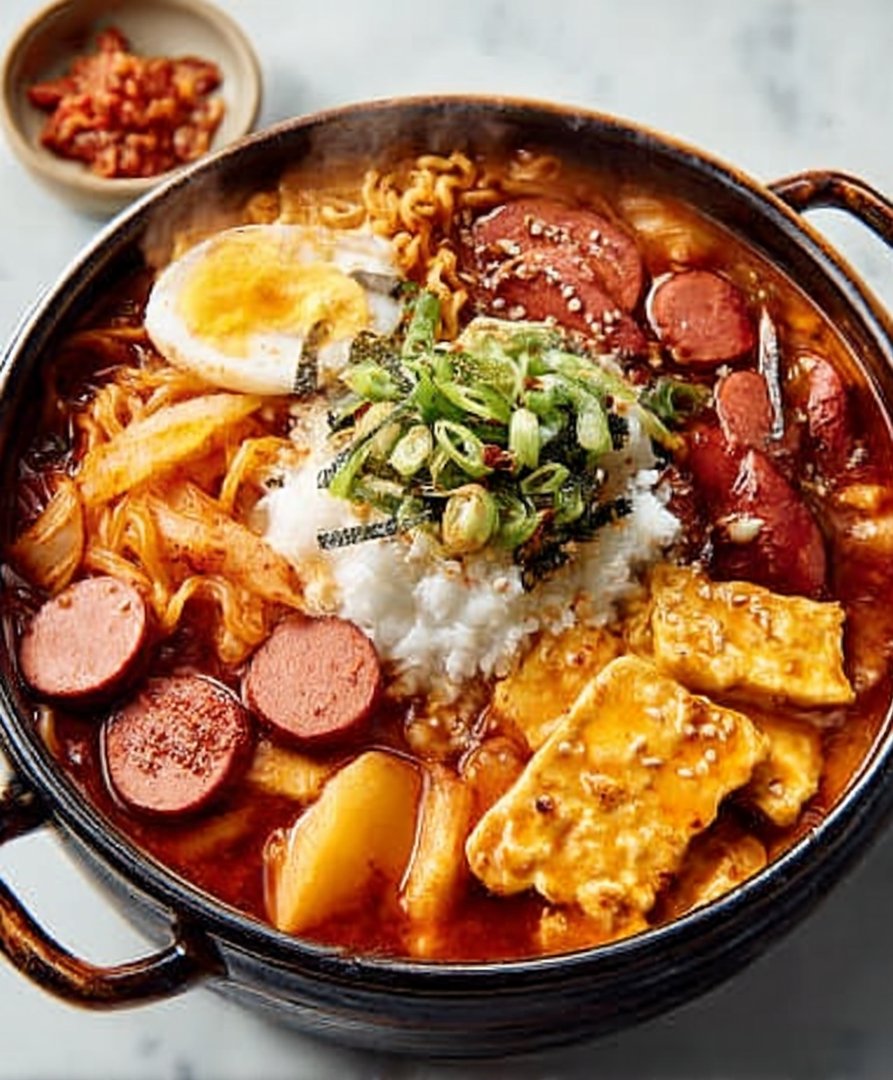
The air is thick with savory steam, the aroma of spicy gochujang mixing with rich broth and slightly sweet instant ramen—this is the glorious, chaotic symphony of flavors we crave. Today, we dive into the legendaryBudae Jjigae Hotpot: A Delicious Guide to This Korean Comfort Foodthat proves the most unexpected ingredients often make the greatest harmony.
Forget everything you know about standard stew because this dish is pure genius; it’s a spicy, comforting blanket of flavor, absolutely perfect for sharing on a chilly evening when only maximum deliciousness will do the trick.
- The unique, savory-spicy broth base is surprisingly simple to assemble, offering deep umami flavor with minimal fuss and cooking expertise.
- This hotpot boasts incredible visual appeal, layering vibrant red broth over colorful vegetables and diverse ingredients ready for simmering.
- Achieve culinary versatility by easily swapping proteins and vegetables based on what you have available in your pantry, making clean-out cooking fun.
- The combination of chewy noodles, soft tofu, and rich beef broth creates an unforgettable textural profile that satisfies every single time.
The Curious History of the Budae Jjigae Hotpot: A Culinary Legend
You might be wondering why a traditional Korean stew contains ingredients that seem more at home at a summer backyard barbecue than in an ancestral kitchen. Well, the history of Budae Jjigae is as rich and layered as its flavor profile. Directly translated,budaemeans “military base” or “army base,” telling you exactly where this delicious Frankenstein’s monster of a dish got its start.
During a difficult time after the Korean War, resources were scarce. Creative cooks found ways to stretch their limited rations by utilizing surplus ingredients from the nearby U.S. military bases. These included items like canned baked beans, canned sausages made from poultry and beef, and slices of processed cheese. Ingenious Korean chefs combined these foreign ingredients with fundamental Korean staples—like spicy gochujang (chili paste), kimchi, and rich broth—creating a dish that was deeply satisfying, filling, and undeniably Korean in spirit, despite its unusual components.
Initially, it was known informally as “Johnson Tang,” a humorous nod to the ingredients being sourced from the base. Over the decades, however, Budae Jjigae transcended its humble origins. It moved from being an inexpensive, necessity-driven dish to a celebrated communal comfort food enjoyed across the nation, especially perfect for crowded weeknight dinners or casual celebrations. It remains a beautiful example of culinary adaptation and resourcefulness, a true testament to finding flavor and comfort even in the toughest situations.
Mastering the Broth: The Key to Authentic Flavor
The magic of this dish truly lies in the broth. If you simply pour store-bought broth over the ingredients, you miss the opportunity to unlock the deep, complex umami that defines authentic Budae Jjigae. We need to create a dedicated seasoning paste that serves as the heart and soul of the hotpot. This paste must deliver heat, depth, and a subtle sweetness that balances the processed ingredients we use.
Start with a generous amount of good quality gochugaru (Korean chili flakes), which provides vibrant color and heat without the raw fire of some other peppers. Mix this with gochujang for thickness and sweetness, adding soy sauce for saltiness, minced garlic, and a touch of rice vinegar or fruit juice for acidity and brightness. This mixture, once dissolved into your high-quality beef or vegetable broth, transforms the liquid into a simmering elixir of comfort. You want the broth to taste intense before it even meets the other ingredients, because those processed elements will soak up a lot of the flavor as they cook.
Remember, the goal is high impact flavor. You are aiming for a spicy, savory, slightly tangy base that coats the noodles and the sausage slices beautifully. If you prefer a less fiery experience, simply scale back on the gochugaru, but never skimp on the garlic or the soy sauce—those are non-negotiable flavor foundations for a successful Budae Jjigae Hotpot.
Building Your Perfect Budae Jjigae Hotpot: A Delicious Guide to Customization
One of the best features of this Korean comfort food is its inherent flexibility. Think of the hotpot as an edible canvas where you can arrange and rearrange ingredients to suit your mood and pantry contents. The traditional version features canned baked beans and instant ramen, but you have full control over the specific proteins and vegetables you choose. This isn’t fine dining; this is fun dining, so embrace the glorious mixture!
For proteins, since we are avoiding certain types, look for high-quality all-beef sausages, chicken franks, or turkey slices. These processed meats retain the nostalgic flavor required for the dish while adhering to our ingredient requirements. Slice the proteins thinly so they cook quickly and absorb the spicy broth thoroughly. You can also add thinly sliced raw beef or marinated chicken pieces for an extra layer of freshness and substance. We certainly recommend adding firm or silken tofu, sliced into cubes, as it soaks up the broth like tiny, delightful sponges.
Vegetables are crucial for freshness and texture. Kimchi is mandatory—use sour, fermented kimchi as its tang is essential for cutting through the richness. Add sliced onions, green scallions, mushrooms (like enoki or oyster mushrooms), and maybe some firm zucchini. Arrange all these beautiful ingredients aesthetically in a shallow pot before pouring the prepared broth over them. The visual appeal of the pre-cooked pot, with its neat piles of colorful ingredients, is part of the fun before the big boil.
The Final Flourishes: Cheese, Noodles, and Timing
The last few steps are perhaps the most exciting. No hotpot is complete without its defining starchy element. Instant ramen noodles, without the included seasoning packet, are traditional and absorb the broth better than most other noodle types. Add them last, right before serving, as they cook very quickly and nobody enjoys soggy noodles.
And now, the controversial but delicious final touch: processed cheese. Placing a slice of American-style cheese (or non-dairy cheese alternative) directly atop the simmering ingredients or noodles might seem strange, but it melts into the broth, adding a creamy, savory layer that mellows the spice and enhances the overall luxuriousness of the stew. This step is completely optional, but highly recommended for achieving that classic, indulgent Budae Jjigae texture. Once the noodles are barely tender, the stew is ready. Bring the whole pot to the table and keep it simmering gently using a portable burner for a truly authentic, communal experience.
Ingredients for Budae Jjigae Hotpot: A Delicious Guide to This Korean Comfort Food
Here’s what you’ll need to make this delicious dish:
- Beef BrothUse high-quality, low-sodium beef or vegetable stock to form the base of the stew, ensuring rich flavor depth.
- KimchiUse fully fermented (sour) kimchi; the sourness is necessary to balance the richness of the processed meats and the sweetness of the gochujang.
- All-Beef Sausages or Chicken FranksSlice these processed items thinly to mimic the traditional ingredients and ensure they cook quickly and absorb the broth.
- Instant Ramen NoodlesSelect instant ramen without using the provided seasoning packet; these noodles cook quickly and offer the perfect chewy texture.
- Gochujang (Korean Chili Paste)This thick paste provides the essential heat, color, and fermented umami sweetness crucial for the hotpot’s flavor profile.
- Gochugaru (Korean Chili Flakes)Adjust this ingredient according to your preferred heat level; it adds sharp, clean chili flavor and a beautiful red hue.
- Soy SauceEssential for adding deep salty notes and boosting the overall savory profile of the broth base.
- TofuFirm or soft tofu, cubed, provides a wonderful soft texture and soaks up the spicy broth beautifully.
- Mushrooms and ScallionsEnoki or oyster mushrooms, plus green scallions, add freshness, texture, and visual appeal to the communal pot.
- Canned Baked BeansDrain the liquid slightly and add the beans for the traditional touch of sweetness and starch that defines this hotpot.
- Garlic and GingerFreshly minced is best; these aromatic ingredients provide the necessary pungent base for the seasoning paste.
The full ingredients list, including measurements, is provided in the recipe card directly below.
How to Make Budae Jjigae Hotpot: A Delicious Guide to This Korean Comfort Food
Follow these simple steps to prepare this delicious dish:
- Step 1: Prepare the Seasoning PasteIn a small bowl, thoroughly combine the gochujang, gochugaru, soy sauce, minced garlic, and minced ginger until a smooth, thick paste forms. This paste is the foundation of your hotpot flavor.
- Step 2: Arrange the Ingredients in the PotSelect a shallow, wide pot (ideally one suitable for tableside cooking). Neatly arrange all solid ingredients—kimchi, sliced sausages, tofu, mushrooms, onions, and baked beans—around the circumference or in visually appealing sections in the pot.
- Step 3: Build and Pour the BrothHeat the beef broth in a separate saucepan until simmering. Whisk the prepared seasoning paste into the hot broth until it is completely dissolved and the liquid turns a vibrant red color. Taste and adjust for saltiness or spice level now.
- Step 4: Start Simmering the StewCarefully pour the seasoned broth over the arranged ingredients in the hotpot until everything is submerged about three-quarters of the way. Bring the pot to a boil over medium-high heat, then reduce the heat slightly to maintain a rolling simmer for about 8 to 10 minutes.
- Step 5: Add Noodles and Final TouchesOnce the broth is boiling vigorously and the vegetables are tender, place the instant ramen noodles directly into the simmering liquid. Lay the slices of processed cheese (if using) over the noodles. Cook for only 2 to 3 minutes, or until the noodles are just tender but still chewy.
Transfer the pot immediately to the table and serve straight from the burner, ensuring every scoop includes noodles, broth, and a savory piece of sausage for the perfect finishing touch.
Troubleshooting and FAQs for the Ultimate Hotpot Experience
Even though preparing Budae Jjigae is relatively straightforward, a few common questions arise when attempting this flavorful Korean comfort food for the first time. Mastering these small details ensures your hotpot is restaurant-quality every time.
Can I make the broth ahead of time?
Absolutely, preparing the seasoned broth a day or two in advance is highly recommended. Combining the seasoning paste with the beef broth and allowing the flavors to meld overnight intensifies the depth and complexity, leading to a much richer final dish when you decide to cook.
What if I don’t have instant ramen noodles?
While instant ramen is traditional due to its specific texture and speed of cooking, you can substitute other starch options. Korean rice cakes (tteok), thick udon noodles, or even very thin spaghetti noodles can work in a pinch, but remember to adjust cooking times accordingly, as they might take longer than the quick-cooking ramen.
How do I make this dish vegetarian?
To make a vegetarian version, swap the beef broth for vegetable broth or a flavorful mushroom stock. Replace the sausages and chicken franks with vegetarian meat alternatives like soy hot dogs, extra mushrooms, or large cubes of seitan. Crucially, ensure the kimchi you use is labeled as vegetarian, as traditional versions often contain seafood products like salted shrimp.
Why do people add cheese to a Korean stew?
The addition of processed cheese, while unexpected, is rooted in the dish’s military base history and serves a crucial culinary purpose. As the cheese melts, it releases starches and fat that thicken the broth slightly, mellowing the spicy heat of the gochujang and creating a luxurious, creamy mouthfeel that is incredibly comforting and satisfying.
What is the best way to serve Budae Jjigae Hotpot?
The only truly authentic way to serve Budae Jjigae is family-style, directly from the pot. Place the simmering pot on a portable burner at the center of the table and serve with small bowls of fluffy steamed white rice. The rice is essential for soaking up the remaining spicy broth after you have enjoyed all the solid components.
The Delicious History Behind Korean Army Stew
Picture this: a brutally cold Korean winter night, limited resources, and an undeniable craving for something fiery and deeply satisfying. That, essentially, is the origin story of Budae Jjigae, often known as Army Stew. It’s a dish born out of necessity following the Korean War, utilizing surplus ingredients from US military bases—namely canned meats and baked beans—combined with traditional Korean staples like kimchi and gochujang. While the circumstances of its creation were tough, the result is pure genius. This stew embodies resilience, transformation, and ultimate comfort, evolving from a survival meal into a beloved culinary icon that defines the spicy, savory spirit of K-Food.
Why This Budae Jjigae Hotpot Became a Global Phenomenon
What makes a humble stew go viral? It’s the sheer complexity of flavor combined with incredible simplicity in preparation. You dump everything into a shallow pot, let it boil aggressively, and watch the magic happen. The spicy, tangy kimchi broth melds perfectly with the savory, meaty additions and the creamy texture provided by the baked beans. Plus, who can resist slurping chewy ramen noodles straight from the pot? Serving this bubbling beauty at the table is inherently communal and interactive, making it the ideal dish for sharing with friends and family when you need warmth and a good dose of spice. This adaptation focuses on maintaining that rich, iconic flavor profile using high-quality alternative ingredients, ensuring every spoonful is packed with authentic Korean comfort.
Gathering Your Budae Jjigae Hotpot Arsenal
Before the stew party begins, we need to gather our troops. Remember, this recipe uses acceptable alternatives for the canned meats, ensuring we still capture that signature savory flavor without compromising on the dish’s integrity. Preparation time is minimal, but the payoff is immense.
Essential Ingredients for the Stew Base
- 4 cups beef broth (or high-quality vegetable broth)
- 1 cup aged kimchi, chopped (the older and sourer, the better)
- 1 small yellow onion, sliced
- 1 cup firm tofu, cut into cubes
- 1 cup mixed mushrooms (shiitake or enoki are excellent choices)
- 1 can (15 ounces) baked beans (ensure they are simple, standard baked beans in tomato sauce)
The Savory & Spice Components
- 4 ounces high-quality all-beef hot dogs or chicken sausages, sliced diagonally
- 4 ounces thin-sliced cooked chicken breast or lamb (optional, for extra depth)
- 2 packages instant ramen noodles (discard the seasoning packets; we are making our own broth!)
- 2 slices mild cheese (such as American or cheddar, optional but highly recommended for creaminess)
- 1 scallion, chopped (for garnish)
The Signature Korean Hotpot Sauce (The Flavor Bomb)
This sauce is the heart and soul of this Budae Jjigae hotpot. Whisk these ingredients together until smooth before starting the cooking process:
- 3 tablespoons Gochujang (Korean chili paste)
- 1 tablespoon Gochugaru (Korean chili flakes, adjust for desired heat)
- 2 tablespoons soy sauce
- 1 tablespoon minced garlic
- 1 teaspoon sugar or rice syrup
- 1/2 teaspoon black pepper
Building the Perfect Korean Stew: Step-by-Step
The beauty of this recipe lies in its assembly rather than complex technique. You will need a shallow pot or large skillet that can transfer directly to a tabletop burner if you plan on serving it traditionally.
Arrangement is Key
Start by arranging the solid ingredients neatly in the pot. Place the sliced onion, kimchi, tofu, mushrooms, sliced all-beef hot dogs, and any additional cooked chicken or lamb around the edges of the pot. Leave a small space in the center for the sauce. Do not add the ramen noodles or cheese yet.
Simmering the Broth and Sauce
Pour the pre-mixed sauce directly into the center of the pot. Next, gently pour the beef or vegetable broth over all the ingredients. Cover the pot and bring the stew to a rapid boil over medium-high heat. Once boiling, reduce the heat slightly and let it simmer for about 10 to 15 minutes. This simmering time allows the deep, spicy flavors from the Gochujang and kimchi to infuse completely into the broth.
The Grand Finale: Noodles and Cheese
After the stew has simmered and the broth tastes rich, add the baked beans directly into the stew. Next, carefully place the blocks of dry ramen noodles into the boiling broth. If using the optional cheese, place the slices directly on top of the noodles. Continue to boil until the ramen noodles are cooked al dente—this usually takes about 3 to 5 minutes, depending on the type of noodle used. Once the cheese has melted and the noodles are soft, garnish generously with chopped scallions and serve immediately, straight from the pot.
Perfecting the Cooking Process

For maximum flavor extraction and efficiency, first arrange all your solid ingredients meticulously in the pot, building flavor layers from the start. Then, combine the broth and the flavor bomb sauce separately before pouring them over the arranged items. Add the quick-cooking items like baked beans and ramen noodles only in the final five minutes.
Add Your Touch
Customize this rich stew by swapping out all-beef hot dogs for turkey meatballs or adding rice cakes (tteok) for extra chewiness. Increase the tang by adding a dash of rice vinegar to the sauce, or substitute the instant ramen with udon noodles for a thicker, heartier meal base.
Storing & Reheating
Store leftovers of this spicy hotpot stew in an airtight container in the refrigerator for up to three days. When reheating, avoid microwaving the noodles, as they may become mushy; instead, reheat the stew gently on the stovetop, adding a splash of fresh broth if it seems too thick.
Expert Tips for the Best Budae Jjigae Hotpot
- Always use sour, aged kimchi; the fermentation provides the essential tanginess that balances the heat and richness of the broth.
- Do not stir the pot heavily once it is boiling; allow the ingredients to cook in their place to prevent the cheese and noodles from sticking to the bottom.
- Taste the broth before adding the ramen; if it lacks depth, introduce a teaspoon of fish sauce (or mushroom seasoning for a vegetarian option) to boost the umami.
I remember the first time I served this spicy stew to my skeptical in-laws who thought canned meat in a stew was sacrilege; they immediately went back for seconds, proving that true comfort food transcends ingredient prejudice.
Frequently Asked Questions About Korean Comfort Food
We know you have burning questions about this beloved dish, so let’s tackle the most common queries regarding this specific hotpot variety.
What is the difference between Budae Jjigae and other Korean stews?
While many Korean stews (jjigae) rely on traditional ingredients like tofu and seafood, Budae Jjigae is unique because it specifically incorporates non-traditional, often processed, ingredients like baked beans and sausages, which date back to its post-war origins. It offers a distinctly savory and deeply complex flavor profile.
Can I make the Budae Jjigae Hotpot vegetarian?
Absolutely! This dish adapts beautifully. Simply use vegetable broth, omit the all-beef hot dogs and chicken, and maximize flavor by including extra mushrooms, large chunks of firm tofu, and perhaps plant-based sausages. Ensure your kimchi is prepared without fish sauce.
What is the best way to serve this hotpot?
The authentic way to enjoy this Budae Jjigae hotpot is to serve it bubbling hot right at the table using a portable burner. Everyone eats directly from the pot, scooping up noodles, meat, and broth into individual bowls as they go, ensuring the stew stays piping hot throughout the meal.
Can I prepare the sauce base ahead of time?
Yes, preparing the Korean hotpot sauce up to three days in advance is highly recommended. Storing the sauce in the refrigerator allows the flavors of the gochujang, garlic, and sugar to meld, creating an even more robust and harmonious taste when added to the broth.
Why are baked beans included in this Korean recipe?
Baked beans are a surprising, yet essential, inclusion dating back to the use of US military rations. They don’t just add sweetness and a slight tomato acidity; they break down slightly during simmering, lending a crucial creaminess and textural richness to the final stew that traditional Korean stews often lack.
A Final Word on the Irresistible Budae Jjigae Hotpot Experience
This savory and spicy Budae Jjigae Hotpot is more than just a recipe; it’s a testament to how incredible flavor can emerge even from the most unusual blend of ingredients. It’s the perfect, low-effort, high-reward centerpiece for any gathering. Whether you call it Army Stew or just your favorite weeknight comfort dish, this bubbling pot of goodness promises warmth, flavor, and a satisfying kick. Gather your friends, prepare your ingredients, and enjoy the delicious history of one of Korea’s most beloved stews. Don’t be shy about customizing the spice level; make this fiery dish entirely your own!
FAQs
What is the secret to achieving that deep, savory flavor profile in this Budae Jjigae Hotpot: A Delicious Guide to This Korean Comfort Food?
The magic truly lies in the balance of the broth base. You must start with a robust stock, typically beef or anchovy broth, which provides the umami backbone. The key flavor makers are the gochujang (chili paste) and gochugaru (chili flakes), coupled with garlic, soy sauce, and a touch of vinegar or fruit juice for acidity. Don’t skimp on letting the flavors meld. Allowing the stew to simmer gently ensures that the savory processed ingredients—our wonderful sliced turkey or beef sausages—release their flavor into the spicy liquid, creating a complex, addictive slurp.
How can I customize the protein and vegetable components of this spicy Korean Army Stew?
One of the best things about making Budae Jjigae at home is how flexible it is. Since we are avoiding traditional chicken products, feel free to load up on high-quality alternatives like thinly sliced bulgogi-style beef or chicken breast, or vegetarian hot dogs and mock meats. For vegetables, standard kimchi and onions are mandatory, but try adding shiitake mushrooms for an earthy depth or crisp snap peas for texture. Remember that the goal is to make a hearty, pantry-friendly meal, so use whatever fresh ingredients you have on hand that cook quickly in a bubbling broth.
Can I prepare the spicy broth base ahead of time for easier weeknight cooking?
Absolutely! Preparing the spicy base ahead of time is a fantastic strategy for quick assembly. You can mix the gochujang, gochugaru, minced garlic, soy sauce, and broth in advance and store it in the refrigerator for up to three days. When you are ready to cook, simply pour the prepared base into your pot, arrange all your fresh and processed ingredients around the edges, and turn on the heat. This preparation method transforms the elaborate experience of cooking Budae Jjigae Hotpot into a super-simple 20-minute weeknight dinner, perfect for banishing Monday blues.
What non-traditional ingredients can elevate the classic experience of a Budae Jjigae Hotpot: A Delicious Guide to This Korean Comfort Food?
While the classic components are fantastic, don’t hesitate to experiment with additions that add extra richness and texture. Many enthusiasts love incorporating a few small rice cakes (tteok) which become delightfully chewy as they absorb the spicy broth. For the ultimate cheesy indulgence, use a slice of American cheese or mozzarella draped over the ramen noodles just before serving—it melts into the broth, adding creaminess and cutting the heat. A few drops of sesame oil stirred in right at the end also provides a beautiful, nutty aroma that enhances the entire dish.
Conclusion for Budae Jjigae Hotpot: A Delicious Guide to This Korean Comfort Food
The journey into making Budae Jjigae is less about precise culinary mastery and more about embracing a communal, deeply satisfying food experience. This stew perfectly embodies modern Korean comfort, bringing together simple pantry staples in a fiery, complex, and customizable broth. Whether you pile it high with beef sausage, instant ramen, or chewy rice cakes, the spicy, bubbling result is the ultimate antidote to a chilly evening. If you seek flavor, warmth, and a genuinely entertaining cooking project, you must try making this Budae Jjigae Hotpot: A Delicious Guide to This Korean Comfort Food immediately. Gather your friends, fire up the burner, and dive spoon-first into this legendary, customizable hotpot.


Leave a Comment